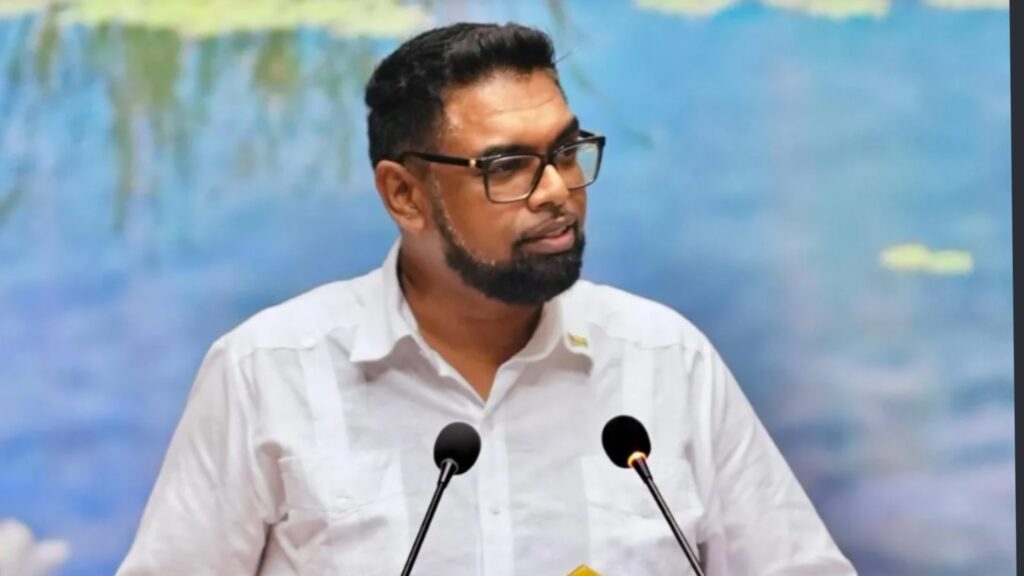
President Dr Mohamed Irfaan Ali has called for greater international investment in biodiversity conservation, emphasising that protecting the natural environment must be recognised as an important part of economic development, job creation and creating opportunities for people.
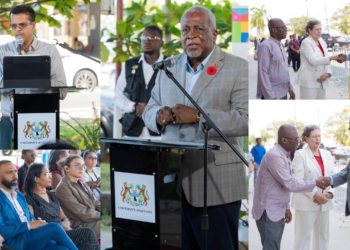
The President made the call while addressing the launch of the Commonwealth Nature Initiative (CNI), a King Charles III-led environmental conservation effort, held on the margins of the Commonwealth Heads of Government Meeting (CHOGM) in Antigua and Barbuda.
In his address, President Ali acknowledged the contributions of His Majesty King Charles III, particularly his longstanding leadership in conservation finance, forest protection, biodiversity and the advancement of indigenous communities.
President Ali stressed that conservation must extend beyond environmental protection to create meaningful economic opportunities for people and economies.
According to him, biodiversity must become a central part of wider development discussions, with countries looking at how natural resources can contribute to livelihoods, employment and economic growth.
President Ali also highlighted Guyana’s recent efforts to bring countries together around biodiversity protection, pointing to the country’s hosting of the second Global Biodiversity Alliance Summit, which brought together more than 146 members, including the United Kingdom, India, China, France, Caribbean nations and several Commonwealth countries.
During the summit, Guyana reaffirmed its commitment to the global 30 by 30 target, which seeks to protect 30 per cent of its land and water by 2030.
However, the President said the discussions also raised an important question about how the international community could move beyond making commitments and begin delivering meaningful results.
He noted that there was broad agreement among participating members that conservation efforts would remain limited without financing on a much larger scale.
“Without financing at scale, we will continue to have conversations about conservation without delivering the action our planet needs,” the president related.
He added that traditional approaches to environmental protection were no longer sufficient and called for greater involvement from the private sector, philanthropic organisations and the scientific community in developing new financing arrangements.
These mechanisms, he explained, should recognise the value of biodiversity services and ensure that countries protecting ecosystems of global importance receive appropriate compensation.
As part of the next steps, members agreed to pursue an investment and finance forum in June 2027, most likely in London, to advance discussions on these financing arrangements.
For Guyana, the President said, the idea of linking environmental protection with economic development was already being pursued through the country’s Low Carbon Development Strategy and its partnership with Norway more than 15 years ago.
He explained that, at the time, Guyana challenged conventional thinking by demonstrating that countries could receive financial benefits for protecting their forests and providing valuable biodiversity services.
President Ali further disclosed that the country has since mobilised more than US$500 million through forest partnerships and carbon credits, demonstrating that conservation and national development can advance together.
“Protecting nature and advancing national development can go hand in hand,” the president said.
Highlighting the Commonwealth’s potential to advance these efforts across member countries, the President also welcomed an agreement reached earlier this year between Guyana and the Commonwealth Secretariat to establish a Commonwealth Centre of Excellence focused on biodiversity science, knowledge sharing and innovative financing.
He noted that the Commonwealth Climate Finance Access Hub has already assisted countries in developing projects and accessing climate financing, adding that its work could be expanded to give greater attention to nature and biodiversity.
President Ali said the proposed centre, the Global Biodiversity Alliance and the new Commonwealth Nature Initiative should be viewed as complementary efforts, with each contributing to a wider international response to environmental challenges.
He also extended an invitation to Commonwealth partners to join the initiative, emphasising the importance of cooperation among countries with significant natural resources, financial capacity and scientific expertise.
President Ali further warned that biodiversity loss carries consequences far beyond environmental degradation, threatening food security, national economies, climate resilience and the future of coming generations.
He urged Commonwealth countries to strengthen cooperation, mobilise financing and translate international commitments into measurable action, emphasising that biodiversity conservation must deliver lasting benefits for both people and the planet.