



-President Ali and VP Jagdeo Lead Bold Climate Action for Sustainable Development
As the world confronts the escalating impacts of climate change, extreme heat has become one of the most urgent and visible threats to mankind.
What was once considered seasonal is no longer the case. Heatwaves are now more frequent, more intense, and more deadly.
Whether it is the wildfires in Canada and Greece or record-breaking temperatures across Asia and the United States, the climate crisis is no longer a distant threat; it is a lived experience for millions of people.
Against this backdrop, Guyana, a small South American nation that is nestled between the Amazon and the Atlantic, is emerging as a surprising yet significant player in the global climate response.
Recognised for its richness in rainforests and low emissions, Guyana’s environmental leadership offers a model worth watching.
Over 85 percent of Guyana’s landscape is covered by forests that act as powerful carbon sinks, absorbing millions of tonnes of carbon dioxide each year.

However, it’s not just nature that is doing the work. It is the dedication, commitment, and brilliant minds of Vice President Dr. Bharrat Jagdeo and President Dr. Mohamed Irfaan Ali that have adopted bold climate policies, placing sustainability at the heart of development.
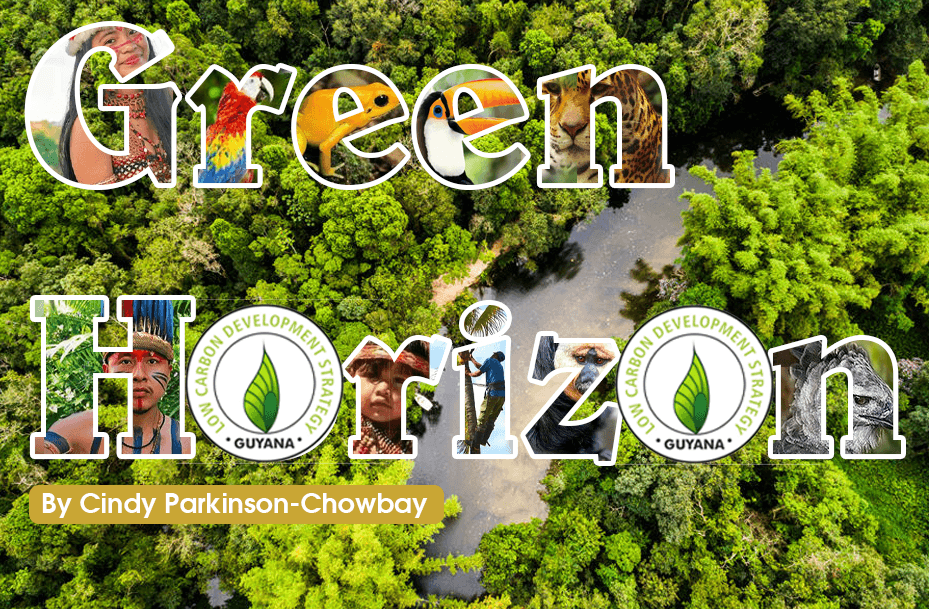
Under President Ali, Guyana has embraced an ambitious Low Carbon Development Strategy (LCDS) 2030.
This strategy outlines a framework to protect forests, invest in renewable energy, promote sustainable agriculture and tourism, and create green jobs, particularly for indigenous communities.
It also reflects a core belief that environmental protection and economic growth are not mutually exclusive but deeply interdependent.
Meanwhile, Vice President Jagdeo, a former president and long-time climate advocate, continues to be a leading voice in international climate diplomacy.
Dr. Jagdeo was instrumental in crafting the original Low Carbon Development Strategy (LCDS) in 2009 and in forging Guyana’s landmark partnership with Norway, the first international agreement that compensated a developing country for preserving its forests.
Recognised locally, regionally, and internationally, the Vice President is often hailed as a “Champion of the Earth” and is widely regarded as the visionary architect behind the LCDS.
Today, Dr. Jagdeo advocates globally for climate financing mechanisms that reward forest-rich developing nations for their contributions to climate stability.
These types of leadership displayed by President Irfaan Ali and Vice President Dr. Bharrat Jagdeo come at a time when the world is in desperate need of solutions.
Heatwaves, which are now intensified by rising global temperatures, pose serious risks to health, food security, and infrastructure.
There are also vulnerable populations in cities and rural communities alike that are facing increasing threats from dehydration, heat stroke, crop failure, and energy blackouts.
The term ‘urban heat island’ has moved beyond academia; it’s now a daily reality in many parts of the world.
While major carbon producers continue to debate timelines and targets, Guyana is acting, and its actions are resonating.
Furthermore, by maintaining one of the world’s highest forest cover rates, investing in solar and hydropower, and advocating for international frameworks that incorporate forest conservation, Guyana is demonstrating that small countries can lead on significant climate issues.
At a time when climate headlines are often dominated by catastrophe, Guyana offers a rare story of progress.
It reminds us that climate leadership is not about size or wealth; it’s about vision, responsibility, and commitment.
As the planet heats up, countries like Guyana are offering more than just carbon sinks. They’re offering hope and, honestly, a roadmap for a future that actually works.
Recently, world leaders, diplomats, and environmental advocates gathered in Georgetown, Guyana, for the first-ever Global Biodiversity Alliance Summit 2025, hosted by President Dr. Mohamed Irfaan Ali.
Held at the Arthur Chung Conference Centre, the summit brought together prominent figures including Ecuador’s Vice President María José Pinto, former Colombian President Iván Duque Márquez, British High Commissioner Jane Miller, U.S. Ambassador Nicole D. Theriot, and EU Ambassador René van Nes.
They joined Indigenous leaders, scientists, and policymakers to advance a united global agenda aimed at protecting biodiversity and addressing the urgent challenges of climate change.
The summit emphasised the profound interconnection between biodiversity loss and climate change, with deliberations centred on sustainable development, ecosystem restoration, and the strengthening of international cooperation.
This historic gathering marks a key milestone in global efforts to safeguard the planet’s natural resources and ensure a more resilient, climate-secure future.
Want more stories like this?
Subscribe to The El Dorado Beacon for weekly updates on sustainable development, Indigenous affairs, and climate action across Guyana.


