The National Cultural Centre (NCC) in Georgetown, Guyana, stands as the country’s premier venue for cultural and performing arts.
Located on Homestretch Avenue in D’Urban Park, south of the Botanical Gardens, the Centre has been a cornerstone of Guyanese cultural life since its official opening on May 16, 1976.
Its construction was initiated in 1972, with the design by Guyanese architect Norris Mitchell selected through a national competition. Despite challenges such as delays and material shortages, the Centre was used during the 1972 Caribbean Festival of Creative Arts (CARIFESTA) with temporary structures.
The building was completed over four years and five months, featuring a seating capacity of approximately 2,000, a 48-foot-deep stage with an orchestra pit, and a 72-foot wide and 20-foot-high opening.
The Centre is renowned for its architectural features, including a chandelier crafted from local woods and a mural titled “Memorabilia II” by artist Denis Williams. It has hosted a diverse array of events,
including theatre productions, concerts, dance performances, and national celebrations. Notably, it served as a venue for the National Drama Festival until 2017.
In recent years, the NCC has undergone significant upgrades to modernise its facilities. In 2019, the Centre received a sound system upgrade, and in 2021, a major renovation project was undertaken at a cost of $84 million.
These improvements included the installation of new theatre seats, enhanced lighting, and upgraded sound and security systems.
Today, the National Cultural Centre continues to be a vital hub for the arts in Guyana, offering a platform for both local and international artists to showcase their talents and for audiences to experience the rich cultural heritage of the nation.
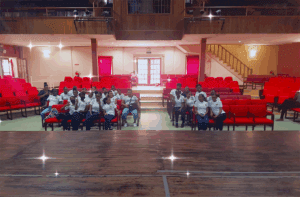
The Theatre Guild of Guyana, affectionately known as the ‘Playhouse,’ is one of the country’s most cherished cultural institutions.
Established in 1957 and officially opened in 1960, it stands as the second-oldest theatrical venue in the English-speaking Caribbean.
The Guild has played a pivotal role in nurturing Guyanese and regional talent, serving as a training ground for actors, playwrights, directors, and other theatre practitioners.
Notable alumni include Slade Hopkinson, Wilbert Holder, and Ken Corsbie, who have made significant contributions to Caribbean theatre.
In its ‘golden years,’ the Guild mounted six major productions annually, including the iconic satirical revue series, The Brink, which later evolved into The Link Show.
The Playhouse & Eucalyptus Garden Theatre
Located at 115 Parade Street, Kingston, Georgetown, the Playhouse features a 300-seat indoor auditorium and the Eucalyptus Garden Theatre, an open-air venue designed in a circular, coliseum-style layout.
This unique design fosters intimacy between performers and the audience, harking back to ancient theatrical traditions
The Eucalyptus Garden Theatre was established in 2015 through the efforts of Dr. Paloma Mohamed, who used her Sabga Award as a gift to the Guild and the people of Guyana.
Designed by engineer Bert Carter and built by the Rambarran Brothers, it serves as a versatile, child-friendly space with a built-in seating capacity of 65 and the potential to accommodate up to 800 additional chairs on its grounds.
Theatre Guild Awards
The Guild honors outstanding performances through the Theatre Guild Awards, a tradition revived in 2011 after a hiatus since the early 1970s. These awards recognize excellence in acting, directing, and playwriting, among other categories. Additionally, special honors such as the Icon of the Arts Award and Lifetime Award acknowledge significant contributions to the dramatic arts.
Visiting & Getting Involved
The Theatre Guild’s office operates Monday to Friday, 10 AM to 2 PM. While performances are not held regularly, the Guild hosts various workshops and events throughout the year. For the latest schedules and to explore membership opportunities, you can visit their official website: theatreguildgy.wixsite.com/ttgg.
Whether you’re a theatre enthusiast, a budding artist, or someone interested in supporting the arts, the Theatre Guild of Guyana offers a welcoming space to engage with the vibrant cultural scene of Georgetown.